

What changes when a building is made in a factory
The word "prefab" carries baggage in Ireland — decades of it, mostly parked in school yards. It is worth being clear about how far volumetric manufacturing has moved from that inheritance, because the differences are not cosmetic. They run through every stage of how a building gets made.
Quality is checked indoors
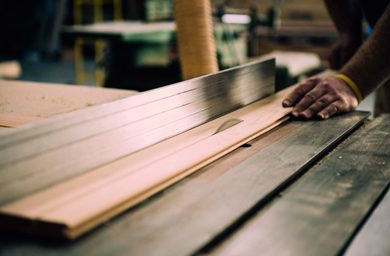
On a conventional site, the most performance-critical work — insulation continuity, the airtightness layer, window installation — is done outdoors, in sequence, under programme pressure, in Irish weather. In a factory, the same work is done at bench height, in the dry, by the same team every time, and inspected before the next layer covers it.
The results are measurable. Airtightness is where factory work shows most clearly: our buildings test past the passive house benchmark of 0.6 air changes per hour — a figure most site-built projects never approach.
The programme runs in parallel
Offsite construction's speed is often misunderstood as fast assembly. Assembly is fast — twelve modules to roof level in a day, in the case of our Cork school building — but the deeper gain is concurrency. While foundations are prepared on site, the building itself is already in manufacture. Two critical paths run at once, and weather affects neither the factory nor, much, a few days of craneage.
For occupied sites — schools above all — the arithmetic changes what is possible. A term-time build becomes a midterm-break installation. Facilities keep operating because the site compound barely exists.
Waste is designed out
Construction and demolition waste is one of Ireland's largest waste streams. A factory inverts the site skip economy: materials are ordered against a cutting list, offcuts return to stock for the next job, and packaging is consolidated and recycled at one location. Completing 92% of construction offsite, as we do, means the waste profile of the remaining site works is small enough to count by hand.
What stays the same
None of this changes what a building has to be: designed for its site, compliant with Part L and NZEB, engineered, fire-safe, durable and worth looking at. Factory methods are a means of achieving those things with more certainty — not a substitute for achieving them. The right question about any offsite building is the same as for any building: does it perform, and can they prove it?